


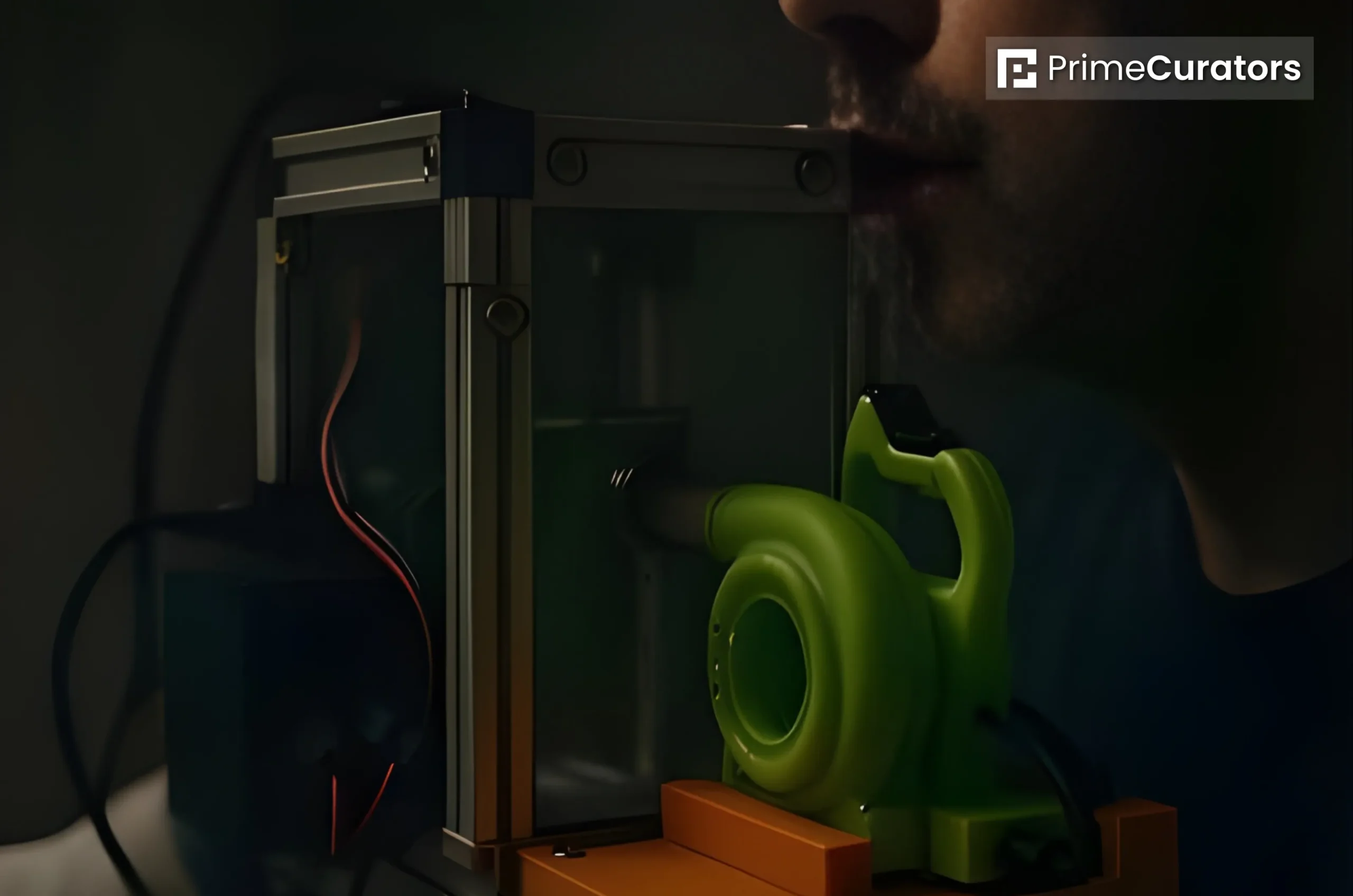
A Portable Device Developed to Detect Disease Markers in Human Breath
A Breath That Tells Your Health Story
Imagine a world where a simple breath test could tell you if you’re sick—no needles, no blood tests, no hospital visits. That future might be closer than you think. Scientists at the University of Chicago ↗ have developed a groundbreaking portable device called the Airborne Biomarker Localization Engine (ABLE), capable of detecting disease-related molecules directly from human breath.
This innovative technology represents a major leap forward in non-invasive health monitoring and could change how doctors diagnose and track diseases—from diabetes to infectious illnesses—without drawing a single drop of blood.
How the ABLE Device Works
The ABLE device operates by pulling in ambient air and condensing it into tiny droplets on special nanostructured surfaces. These droplets trap airborne biomarkers, which are microscopic molecules linked to different diseases or metabolic conditions.
Once collected, these droplets can be analyzed using existing liquid-based biosensors—a key advantage that allows researchers to integrate ABLE with current diagnostic technologies. This smart design eliminates the need for invasive sampling methods like blood tests, swabs, or biopsies.
According to researchers, the device could detect biomarkers linked to glucose levels, respiratory infections, and even metabolic disorders, offering real-time health monitoring in everyday settings.
Transforming Diagnostics with Breath
Breath analysis isn’t a new idea, but it’s long been limited by technological challenges—mainly the difficulty of detecting low-concentration molecules in the air. The ABLE device overcomes this by leveraging advanced nanotechnology to concentrate these molecules, making them easier to identify.
Dr. Sihong Wang, one of the leading researchers behind the project, noted that the team’s approach makes it possible to analyze breath with accuracy comparable to lab-based tests. This advancement could have wide-ranging applications:
- Early detection of diseases like diabetes, asthma, or certain infections.
- Monitoring hospital environments for airborne pathogens.
- Public health surveillance, especially during disease outbreaks.
This type of portable, point-of-care technology can dramatically reduce testing delays and costs—making health diagnostics more accessible globally.
Beyond Hospitals: Everyday Health Monitoring
What makes ABLE particularly exciting is its potential use outside of clinical settings. Imagine portable devices in workplaces, airports, or homes that continuously monitor for signs of illness, much like air purifiers—but smarter.
For instance, diabetics could track glucose changes through their breath instead of finger pricks, while hospitals could deploy ABLE units to detect infectious agents in the air before they spread.
The implications go far beyond convenience—it could lead to early disease prevention, improved pandemic preparedness, and better overall public health outcomes.
You can read more about similar innovations in our article on Breakthrough Medical Technologies ↗.
The Future of Needle-Free Diagnostics
While ABLE is still under research and refinement, its potential is enormous. The University of Chicago team believes it could soon become a commercially viable diagnostic tool, especially as healthcare shifts toward more personalized, real-time monitoring.
This innovation symbolizes a broader trend—science moving away from reactive medicine (treating disease after it appears) to preventive care (detecting disease before it worsens).
With such technology, the simple act of breathing could become one of our most powerful diagnostic tools.




Thanks for updated us daily. Great info
You’re Welcome. Thanks