


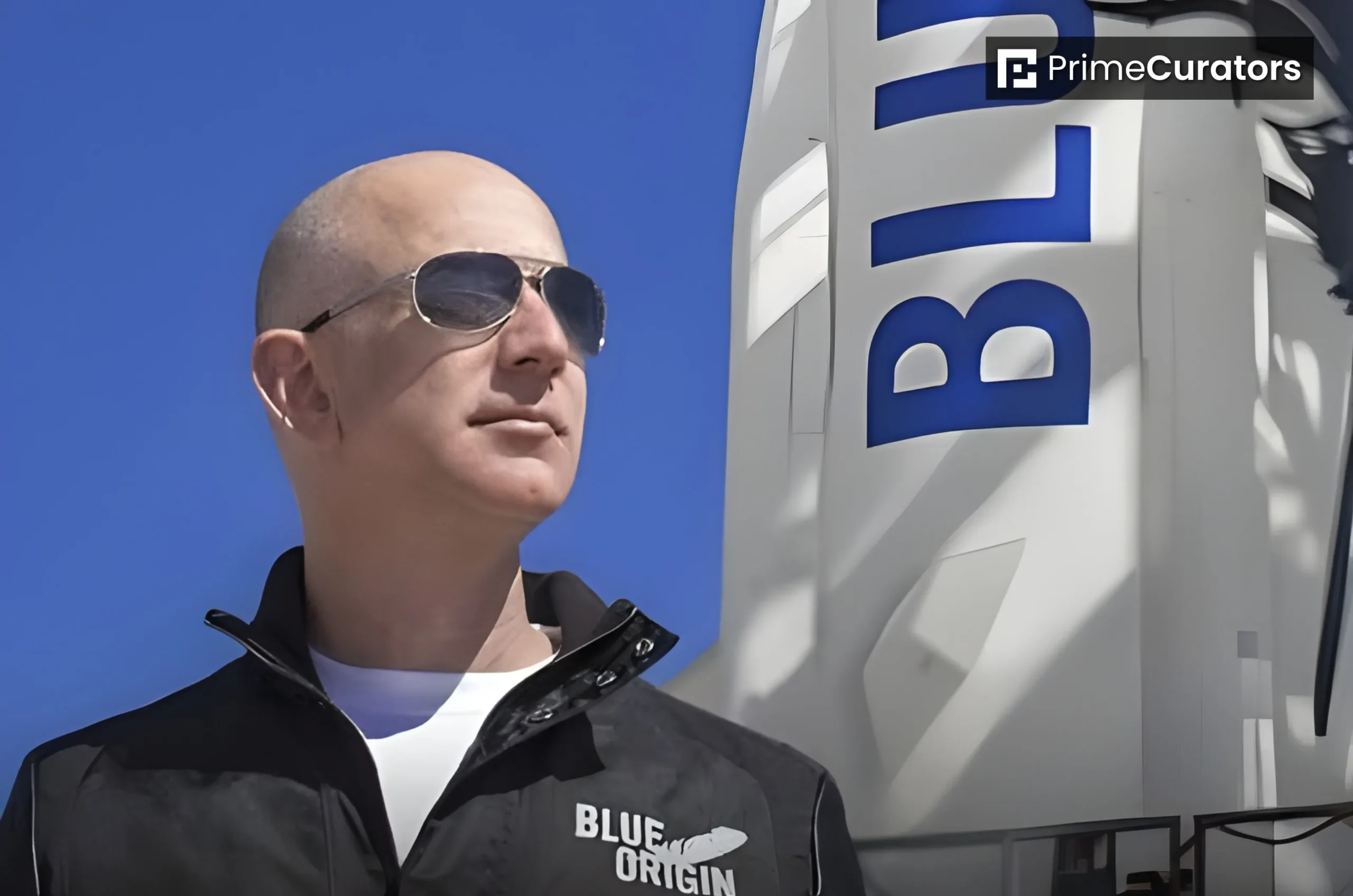
Jeff Bezos Predicts Future Data Centers Will Move to Space
In a bold vision for the future, Amazon founder Jeff Bezos ↗ has predicted that data centers will one day operate in space, addressing the world’s growing energy and cooling challenges caused by artificial intelligence (AI) and cloud computing.
Bezos believes that within the next 10 to 20 years, humanity could see gigawatt-scale data centers orbiting Earth, offering clean, sustainable power and freeing up resources on the planet. His comments come at a time when AI-driven technologies are placing unprecedented strain on global energy systems, forcing companies to look for creative, long-term solutions.
Why Space Could Be the Next Frontier for Data Storage
Data centers — the digital backbone of the internet — consume vast amounts of electricity, especially as AI models and cloud services continue to expand. Traditional data centers already use enormous amounts of power for both computing and cooling, with some estimates suggesting they could account for up to 10% of global electricity use by 2030.
Bezos argues that moving these massive operations into space could solve two key challenges:
- Energy Supply: Space-based solar energy could provide near-constant power, eliminating reliance on fossil fuels or limited terrestrial grids.
- Cooling Efficiency: The cold vacuum of space offers natural cooling advantages, potentially cutting down operational costs and environmental impact.
This futuristic concept aligns with Bezos’s long-held belief that space will one day host much of humanity’s heavy industry, leaving Earth as a more livable, green planet. His space exploration company, Blue Origin, is already working toward creating the infrastructure to make this vision feasible.
For example, Blue Origin’s New Glenn rocket could eventually support missions that transport such large-scale systems into orbit — a massive leap for both space technology and data infrastructure.
Read more about innovative tech developments in our Tech Section on Prime Curators ↗.
The Challenges Ahead
While Bezos’s prediction sounds visionary, experts caution that the technical and economic barriers are enormous. Building, launching, and maintaining orbiting data centers would require:
- Reliable energy storage systems for continuous operation.
- Advanced cooling technologies that can function in the vacuum of space.
- Secure communication networks for data transfer between Earth and orbit.
- Cost-effective launch and maintenance options, which remain prohibitively expensive today.
However, Bezos is not alone in his optimism. Space agencies and tech innovators have already begun exploring related concepts. For instance, Microsoft’s Project Natick tested underwater data centers for efficient cooling, while Japanese researchers have proposed similar orbital data hubs.
If Bezos’s timeline holds true, we could be entering an era where the next “cloud” is literally in the sky — powered by space-based solar panels and managed remotely through AI automation.
Comparing the AI Boom to the Dot-Com Era
Bezos also compared today’s AI explosion to the dot-com boom of the early 2000s. He acknowledged that while speculative hype is natural during technological revolutions, AI’s transformative power is undeniable.
“Like the internet, AI will have its bubbles — but its long-term impact will be universal,” Bezos noted.
Indeed, AI’s rapid rise has led to massive investments in computing infrastructure, with companies like Amazon Web Services (AWS), Google Cloud, and Microsoft Azure racing to expand their capabilities. The strain this places on Earth’s resources has accelerated discussions about energy sustainability and future-ready technology.
Looking Toward a Space-Based Future
The idea of data centers orbiting Earth might sound like science fiction, but many of today’s technologies — from satellite internet (like Starlink) to AI-assisted robotics — were once considered impossible.
If Bezos’s vision becomes reality, it could redefine how humanity stores, processes, and protects its digital information. Beyond efficiency, it could also open up new frontiers in space economy, with specialized industries emerging to support maintenance, energy, and communication systems in orbit.
For now, the world watches as Bezos and other tech pioneers push the boundaries of what’s possible — not just for business, but for the planet’s sustainability and technological evolution.
Stay updated with more futuristic innovations in technology, AI, and space by visiting Prime Curators Tech News ↗.




[…] Amazon Founder Jeff Bezos Predicts Future Data Centers Will Move to Space […]