


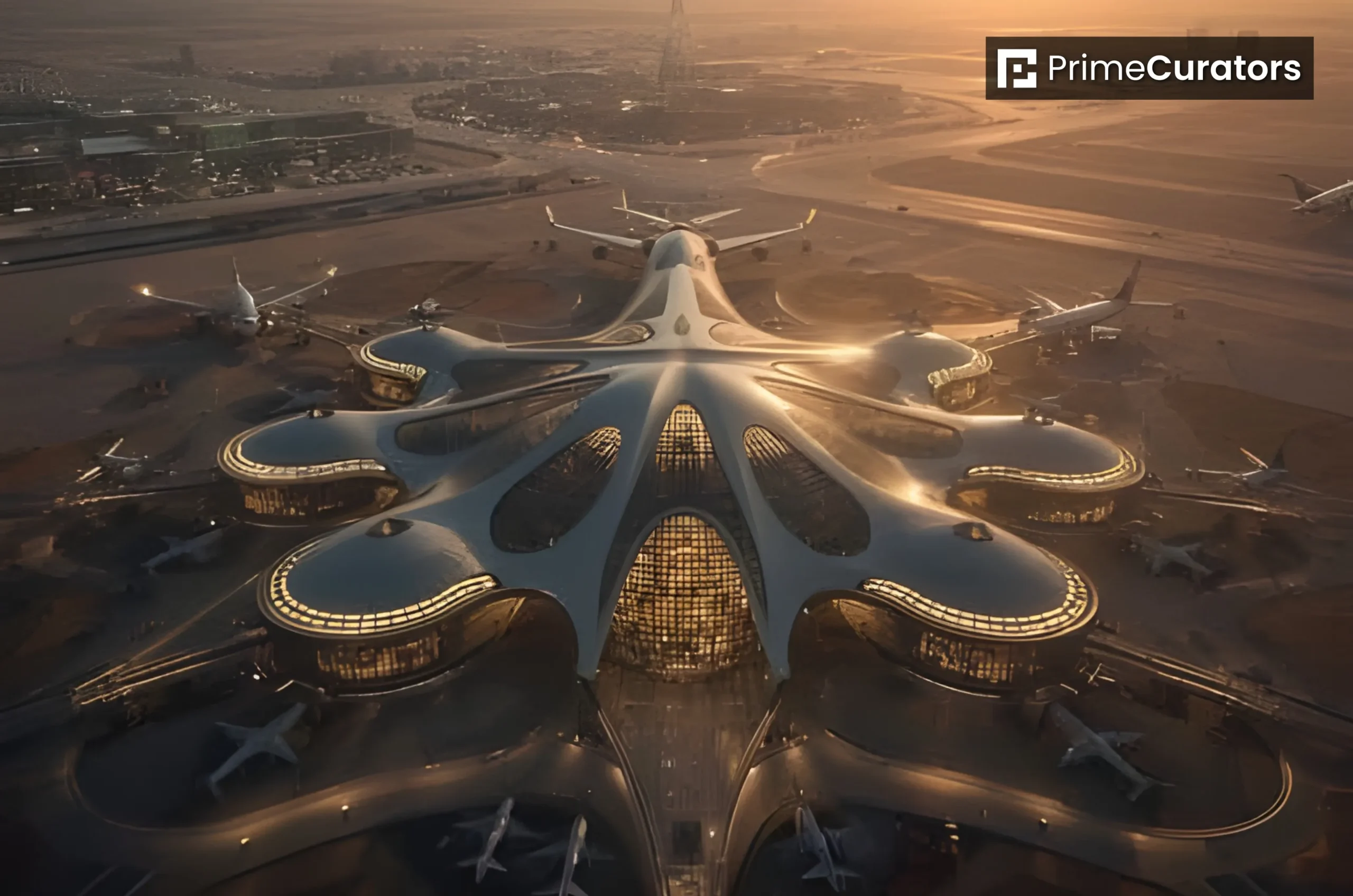
Dubai Unveils $35 Billion Mega Airport — The Future of Global Aviation
Dubai, known for breaking world records and pushing the boundaries of innovation, has just announced a $35 billion mega expansion of Al Maktoum International Airport — a project that promises to reshape the global aviation landscape. Once completed, this futuristic hub will become the world’s largest airport, featuring over 400 passenger gates and the ability to accommodate 260 million travelers annually.
This bold move underscores Dubai’s long-term vision to remain the epicenter of global connectivity, bridging continents and redefining the future of air travel.
A New Era of Aviation Innovation
According to Dubai’s ruler, Sheikh Mohammed bin Rashid Al Maktoum ↗, the project is not just about expansion — it’s about setting a new global benchmark for how airports operate. The airport will integrate AI-powered systems to manage check-ins, security, baggage, and flight operations seamlessly.
Imagine walking into an airport where everything — from check-in to boarding — happens with minimal human intervention. Advanced facial recognition technology will replace boarding passes, and smart sensors will optimize passenger flow in real-time, making long queues and delays a thing of the past.
This aligns with Dubai’s wider smart city goals, where artificial intelligence and automation play a central role in public infrastructure. (You can read more about Dubai’s tech initiatives in our Technology ↗ section on Prime Curators.)
Sustainability at the Core
Unlike traditional aviation projects, this mega airport will be powered entirely by renewable energy sources. Solar panels, smart cooling systems, and energy-efficient architecture will drastically reduce the airport’s carbon footprint.
This focus on sustainability mirrors global trends in aviation, where airports from Singapore to Amsterdam are prioritizing green energy solutions. However, Dubai’s commitment to building the largest sustainable airport on the planet takes this ambition several steps further.
The UAE has already been at the forefront of renewable energy innovation through projects like Masdar City — and Al Maktoum International’s new chapter further cements that legacy.
Competing With the Best — And Surpassing Them
When complete, Al Maktoum International Airport will dwarf even the biggest players in aviation, such as Hartsfield-Jackson Atlanta, Beijing Daxing, and Istanbul Airport.
To put this in perspective, Atlanta — currently the world’s busiest airport — handles around 100 million passengers annually. Dubai’s new hub will handle more than 2.5 times that capacity, showcasing just how massive this project truly is.
Dubai International Airport (DXB) already ranks among the top international airports globally, serving over 85 million passengers annually. With Al Maktoum’s expansion, the UAE is positioning itself as the undisputed global leader in aviation and travel.
A Catalyst for Economic Growth
Beyond its architectural and technological marvels, the airport will be a major economic driver. The project is expected to generate hundreds of thousands of jobs in construction, engineering, logistics, and tourism.
As Dubai continues to attract millions of visitors each year, this mega airport will ensure the emirate’s infrastructure can keep pace with its growth. Experts also predict a significant boost in international investment, particularly in aviation technology and logistics sectors.
This project aligns perfectly with the UAE’s “Vision 2031” — an initiative aimed at making the nation a hub for innovation, sustainability, and luxury travel.
The Future Is Taking Off
The unveiling of the $35 billion Al Maktoum International Airport is more than just an aviation project — it’s a statement of intent. Dubai is not content with being among the best; it aims to be the best.
By blending AI-driven innovation, renewable energy, and unmatched passenger capacity, this airport represents the next chapter in human mobility.
The sky, it seems, is no longer the limit — especially in Dubai.