


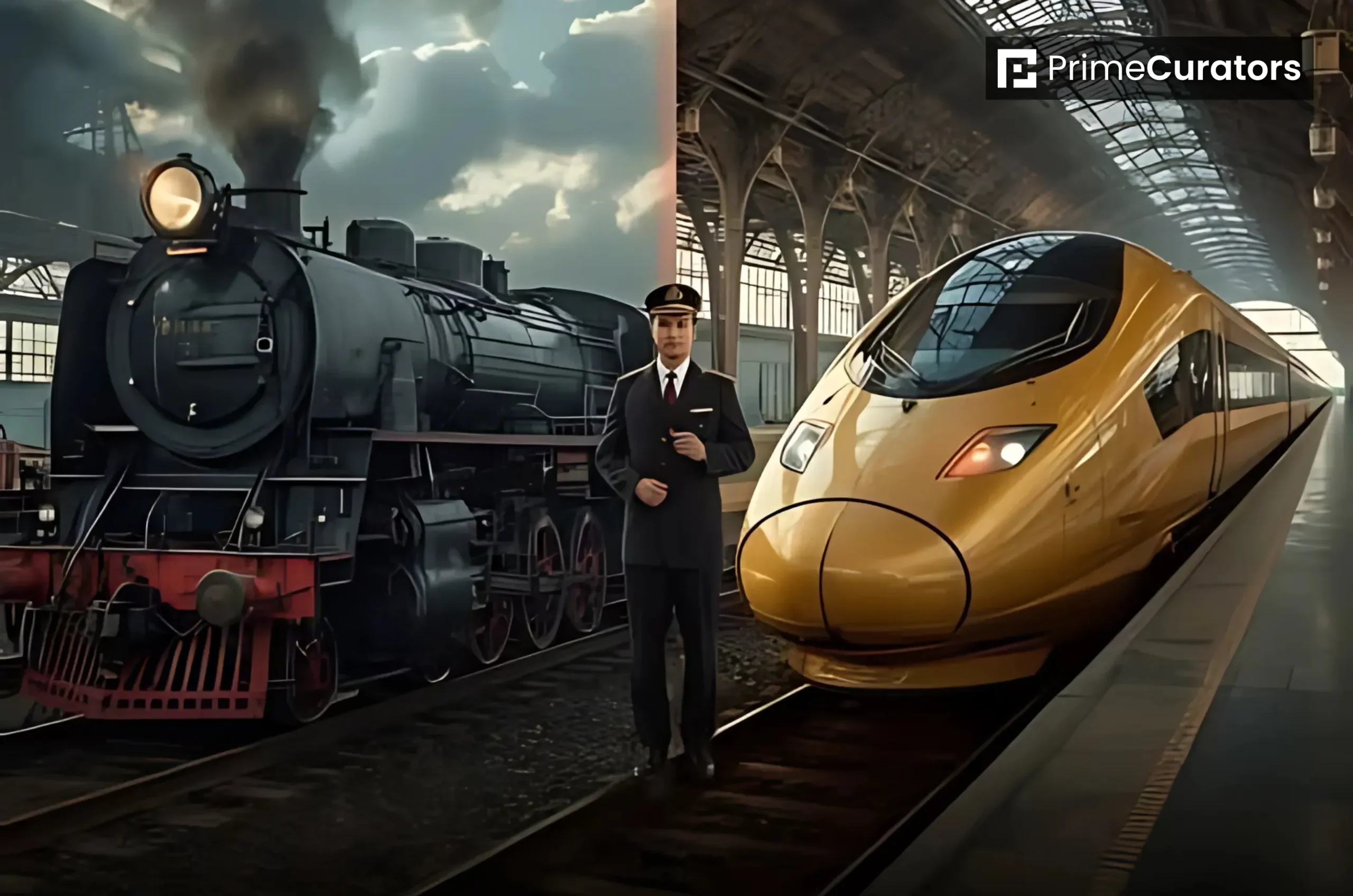
A single image can tell a thousand stories, and in this case, two photos of the same Chinese train driver—taken 26 years apart—capture the breathtaking transformation of China’s railway system.
Back in the mid-1990s, coal-fired steam locomotives were still a common sight on China’s mainline routes. The nation’s vast railways echoed with the sound of engines powered by coal, smoke, and grit. The last regular steam train in China didn’t retire until 2005, marking the end of an era.
Fast forward to 2024, and the difference is nothing short of extraordinary. Standing on the same platform, the same driver now operates one of the sleek, futuristic high-speed trains that define modern China’s transport landscape.
The Rise of High-Speed Rail
Today, China boasts the world’s largest high-speed rail network, stretching an incredible 48,000 kilometers. These bullet trains can cruise at speeds of 300–350 km/h, connecting bustling megacities and rural towns alike with unmatched efficiency.
In 2023 alone, this vast network handled approximately 3.9 billion passenger trips. That’s nearly half the world’s population boarding trains in just one year—a figure that highlights how rail travel has become the backbone of modern mobility in China.
For more insights on how innovation shapes daily life, check out our Technology section ↗.
🧠 Related Read:
- China’s Graphene Battery Charges In 5 Minutes, Lasts 4 Times Longer Than Lithium And Never Catches Fire ↗
- China Creates Fabric For Firefighters That Can Survive 1,200°C Of Heat Without Shrinking And Melting ↗
- China Just Created a Nuclear Battery the Size of a Coin – Lasts 100 Years Without Charging ↗
A Leap in Just One Career Span
What makes this story even more striking is the human perspective. One driver’s career spans the entire leap from coal-dust-filled cabins to state-of-the-art cockpits of bullet trains. It’s a living reminder of how quickly nations can evolve when technology, infrastructure, and vision align.
This isn’t just about trains—it’s about progress, resilience, and transformation. Within just a quarter of a century, China has gone from industrial-age transport to becoming the global leader in high-speed rail.
More Than Just Trains
China’s investment in high-speed rail isn’t only about faster travel. It has reduced air pollution, boosted regional economies, and created an affordable, eco-friendly alternative to flying. With such infrastructure, the country is setting an example of how sustainable mass transit can shape the future.
For related reads, explore our coverage of Global trends ↗ and Science & Space ↗.