


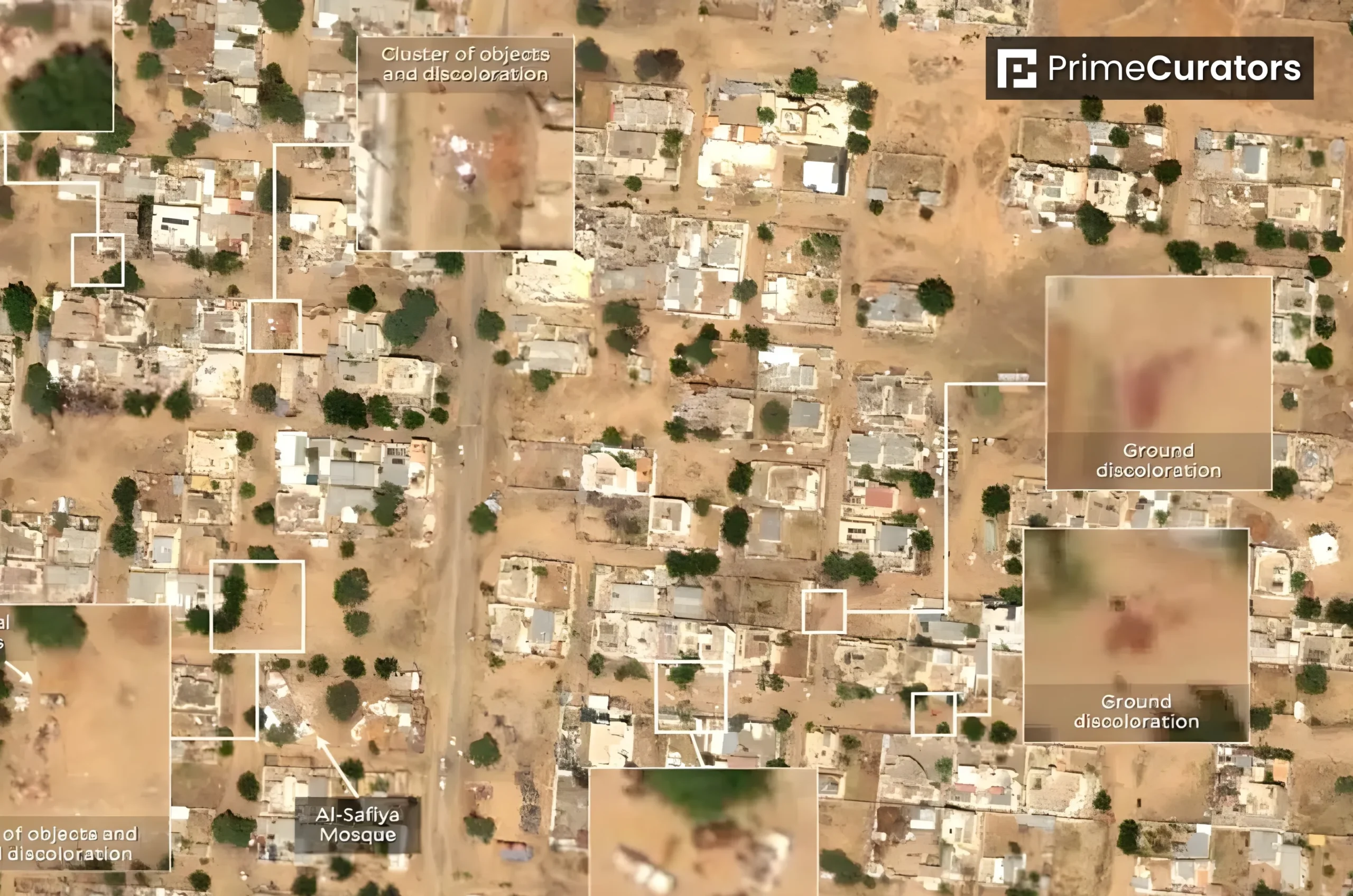
Hell on Earth: Pools of Blood on Sudan ‘s El-Fasher After a Suspected RSF Massacre
Sudan ’s Darfur region has once again descended into horror as El-Fasher, the capital of North Darfur, became the scene of what witnesses are calling a massacre. Reports emerging from the war-torn city describe pools of blood, burned homes, and widespread civilian deaths after an alleged assault by the Rapid Support Forces (RSF).
The attack, which reportedly took place over the weekend, has drawn international condemnation and renewed fears that Sudan’s brutal civil conflict is spiraling further out of control. Humanitarian workers describe the situation as “hell on earth,” with bodies left in the streets and survivors fleeing for safety amid continuing violence.
A City Under Siege
El-Fasher, once a bustling trade hub, has become a battlefield in Sudan’s year-long conflict between the Sudanese Armed Forces (SAF) and the Rapid Support Forces (RSF) — two rival factions that were once allies. According to the Sudan Ministry of Health and several local rights organizations, the recent bloodshed in El-Fasher may be one of the deadliest attacks since the conflict began in 2023.
Residents report that RSF troops stormed civilian neighborhoods, opening fire and targeting anyone attempting to flee. Entire families were reportedly killed in their homes. Humanitarian agencies, including the United Nations Office for the Coordination of Humanitarian Affairs (OCHA), have expressed grave concern over the targeting of civilians and the escalating ethnic violence in Darfur.
“We are witnessing atrocities that echo the darkest days of Darfur’s history,” a UN spokesperson said, referencing the genocide that devastated the region in the early 2000s.
Witness Accounts Paint a Grim Picture
Eyewitnesses describe El-Fasher as a ghost town. Hospitals are overwhelmed, and aid workers say the injured are dying due to lack of medical supplies. “There are pools of blood in the streets,” one resident told Reuters. “They shot at anything that moved.”
Satellite imagery and on-the-ground footage shared by human rights monitors show entire districts reduced to rubble. While the RSF denies targeting civilians, survivors and aid organizations accuse them of systematic killings and looting — tactics that have been reported repeatedly throughout the conflict.
The International Committee of the Red Cross (ICRC) has urged both warring factions to allow humanitarian access, warning that “tens of thousands of lives are at risk” as food and water supplies dwindle.
Global Condemnation and Calls for Accountability
World leaders and human rights organizations have condemned the attack, calling for urgent investigations and accountability. The United Nations, Amnesty International, and Human Rights Watch have all demanded access to El-Fasher to verify reports of war crimes.
Despite growing international pressure, the conflict shows no sign of slowing. Analysts warn that the fragmentation of Sudan’s military and political systems is fueling chaos, allowing militias like the RSF to act with near impunity.
According to Human Rights Watch ↗,
“The world’s silence on Darfur has emboldened perpetrators of atrocities. Civilians are paying the ultimate price.”
Meanwhile, the African Union and Arab League are pushing for renewed peace talks, but with the two sides entrenched in bitter hostilities, progress remains elusive.
The Humanitarian Toll
Beyond the immediate violence, the humanitarian situation in El-Fasher is catastrophic. Over 10 million Sudanese have been displaced since the conflict began, according to UNHCR ↗. Camps for refugees and internally displaced people are overwhelmed, with limited access to clean water, food, or shelter.
Humanitarian agencies warn that famine could soon follow if aid routes are not opened. “We are watching an entire population suffer in silence,” said an official from the World Food Programme (WFP).
A Crisis the World Can No Longer Ignore
The massacre in El-Fasher serves as a tragic reminder that Sudan’s crisis is far from over. Despite global attention shifting to other conflicts, Darfur’s people continue to endure violence, starvation, and displacement on a devastating scale.
For now, survivors in El-Fasher are left to bury their dead and flee what remains of their homes. But unless the international community takes decisive action — including sanctions, accountability measures, and humanitarian intervention — the suffering in Sudan will only deepen.
This is not just a Sudanese tragedy. It is a human one.