


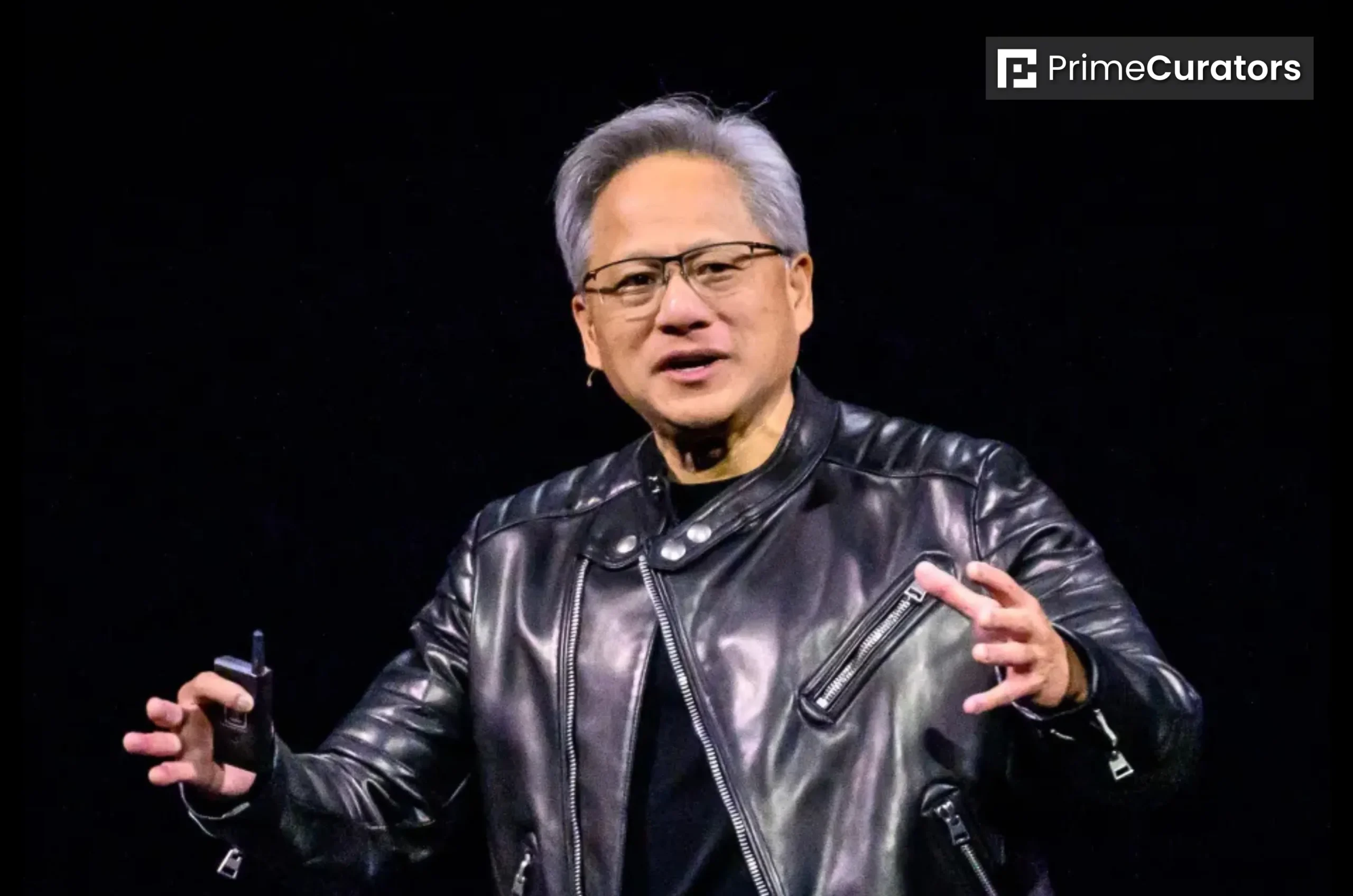
“Humans Will Be Busier in The Future Than They are Now Because of AI”, CEO Nvidia Jensen Huang
A New Age of Work, Not Rest
In an era when Artificial Intelligence (AI) is reshaping industries and redefining productivity, NVIDIA’s CEO Jensen Huang offers a perspective that challenges the common narrative. While many fear AI might lead to massive job losses, Huang believes the opposite — humans will be busier than ever before.
He argues that AI will enhance human capability, not replace it. According to Huang, AI’s power lies in amplifying creativity, boosting productivity, and unlocking new industries that don’t yet exist.
AI: A Tool for Productivity, Not Replacement
Huang emphasizes that AI is a co-pilot, not a competitor. It automates repetitive work, allowing humans to focus on innovation and complex problem-solving.
“AI doesn’t eliminate jobs — it changes them,” Huang explains. “It gives us superpowers to do things we couldn’t before.”
From healthcare to finance, AI is transforming how tasks are performed. For instance:
- Doctors can analyze medical scans faster with AI assistance.
- Developers use AI tools like GitHub Copilot to write cleaner, faster code.
- Designers leverage AI platforms to generate creative concepts in seconds.
Rather than reducing the workload, AI’s integration often leads to more ambitious goals, creating new job categories and demands in fields like robotics, biotechnology, and sustainable engineering.
Why AI Will Make Us “Busier”
Huang’s bold statement — that humans will be “busier” — stems from a realistic observation of human nature. When technology gives us more tools and opportunities, we don’t stop working; we expand our ambitions.
Consider the Industrial Revolution or the rise of the internet — both introduced automation, yet each sparked entirely new industries and millions of jobs. AI is poised to do the same.
Some emerging areas where AI is already creating opportunities include:
- AI Robotics: Building machines that can think, learn, and collaborate.
- Bioinformatics: Using AI to decode complex biological data.
- Creative Tech: Revolutionizing entertainment, marketing, and design.
- AI Governance: Managing ethics, security, and compliance in digital systems.
As these sectors grow, they’ll require skilled humans to innovate, manage, and adapt — leading to more work, not less.
AI and Human Creativity: The Perfect Partnership
Huang believes the most powerful use of AI is not automation, but augmentation. By handling tedious tasks, AI frees humans to explore their creative and intellectual potential.
Think of artists using AI to generate new visual styles, architects designing smarter cities, or teachers using AI tutors to personalize education — these are examples of human-AI synergy driving the next frontier of innovation.
Even companies like OpenAI, Google DeepMind, and NVIDIA itself are developing tools that empower creators, engineers, and scientists to dream bigger than before.
For instance, NVIDIA’s own AI computing platforms are fueling breakthroughs in autonomous vehicles, climate modeling, and drug discovery — all fields where human insight meets machine intelligence.
The Future of Work: Reimagined, Not Replaced
Rather than fearing AI, Huang encourages individuals and organizations to embrace upskilling. Learning to work with AI tools — not against them — will define success in the coming decades.
Countries investing in AI education and innovation ecosystems are already positioning themselves for this future. According to a recent World Economic Forum report ↗, over 97 million new roles could emerge globally by 2025 due to AI-driven transformation.
At Prime Curators, we believe that this shift represents a major opportunity. Our coverage on AI, technology, and digital transformation continues to explore how these trends shape business, creativity, and society. You can read more in our AI and Tech section ↗.
A Future Fueled by AI and Human Ambition
Jensen Huang’s message is clear — AI is not the end of work, it’s the beginning of a new chapter. As humans, we’ll be busier, but in ways that are more meaningful, creative, and impactful.
AI will not replace human ambition — it will ignite it.