


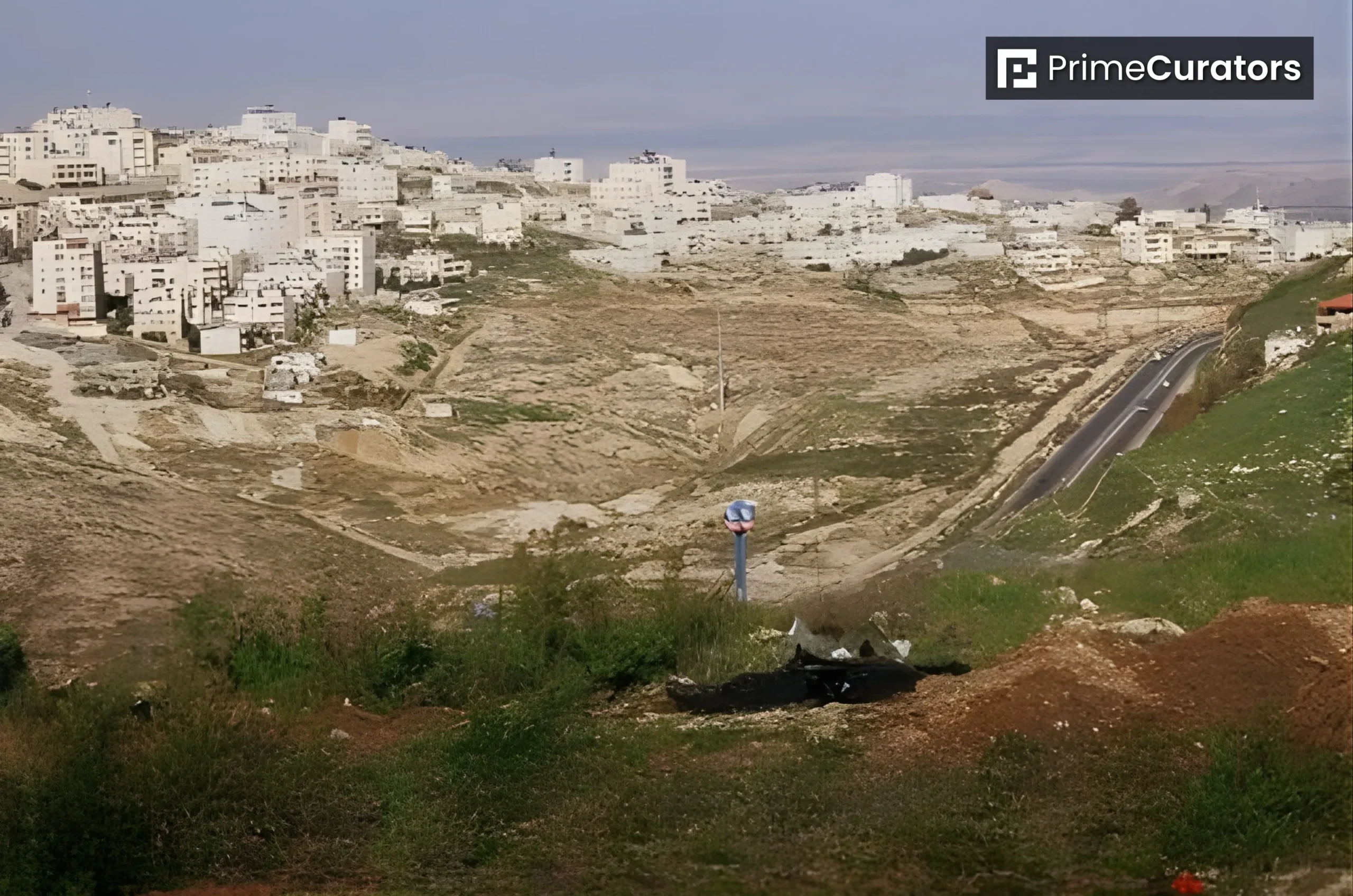
Israel Seizes Over 5,800 Dunams of Palestinian Land Near Jerusalem
The Israeli occupation authorities have issued a new military order to seize 5,856 dunams (approximately 1,447 acres) of land belonging to the Palestinian town of Anata, located northeast of Jerusalem.
The order marks one of the largest land confiscations in recent years and comes amid rising tensions across the West Bank. The move has drawn sharp criticism from Palestinian officials and human rights groups, who argue that it represents yet another step in Israel’s ongoing expansion of settlements in occupied territories — a practice widely considered illegal under international law.
For more updates on regional developments, visit Prime Curators Global Section ↗.
A Familiar Pattern of Expansion
According to local reports, the seized land lies on the outskirts of Anata, an area long targeted for settlement expansion due to its proximity to East Jerusalem and major Israeli settlements. Palestinian landowners were reportedly notified that their property would be taken for “security and military purposes,” a justification frequently used in such orders.
In reality, human rights observers say these claims often mask broader plans to expand existing settlements or construct new infrastructure that strengthens Israel’s control over the region.
The United Nations Office for the Coordination of Humanitarian Affairs (OCHA) ↗ has repeatedly warned that these actions not only displace Palestinian communities but also fragment their remaining territory — making the possibility of a viable, contiguous Palestinian state increasingly difficult.
Palestinian Response and International Concern
Palestinian leaders in the Anata Municipality condemned the decision, calling it “a continuation of colonial expansion under the guise of legality.” They urged international bodies, including the UN and the European Union, to intervene and pressure Israel to reverse the order.
The Palestinian Ministry of Foreign Affairs released a statement asserting that such actions “undermine peace efforts and violate the principles of international law, particularly the Fourth Geneva Convention,” which prohibits an occupying power from confiscating land in occupied territories.
Meanwhile, activists and advocacy groups across the globe have expressed alarm over the ongoing land seizures, arguing that they further entrench a system of segregation and dispossession that Palestinians have endured for decades.
Global Silence and Growing Frustration
Despite widespread condemnation, concrete international action remains limited. The United States and European nations have frequently expressed “concern” over Israeli settlement activities but have stopped short of imposing consequences or sanctions.
According to Al Jazeera ↗, this pattern of diplomatic restraint has emboldened Israel to continue expanding settlements with little fear of reprisal. Analysts note that such moves could further destabilize an already volatile region and undermine any prospects for renewed peace talks.
For broader geopolitical insights, see Prime Curators Politics Section ↗.
Impact on Local Communities
For the residents of Anata, the land seizure is more than just a political headline — it’s a personal tragedy. Many families rely on these lands for agriculture and livestock. Losing them means losing not only income but also a vital connection to their heritage and identity.
Local farmer Abu Nasser shared with reporters that his family has cultivated olive trees on this land for generations. “They are taking our history, our memories, and our future,” he said.
Such personal accounts highlight the human cost of policies that prioritize territorial control over coexistence.
Looking Ahead: The Struggle for Justice Continues
The latest seizure underscores a grim reality — one where Palestinian communities continue to shrink under growing settlement pressure. As international attention shifts to other global crises, the occupation quietly deepens, reshaping the landscape and lives of millions.
Global voices are increasingly calling for accountability and a renewed push for justice. Yet, without tangible international action, the cycle of dispossession is likely to persist.
For ongoing coverage on Middle East politics, human rights issues, and global affairs, follow Prime Curators ↗ — your source for reliable, balanced, and insightful global reporting.