


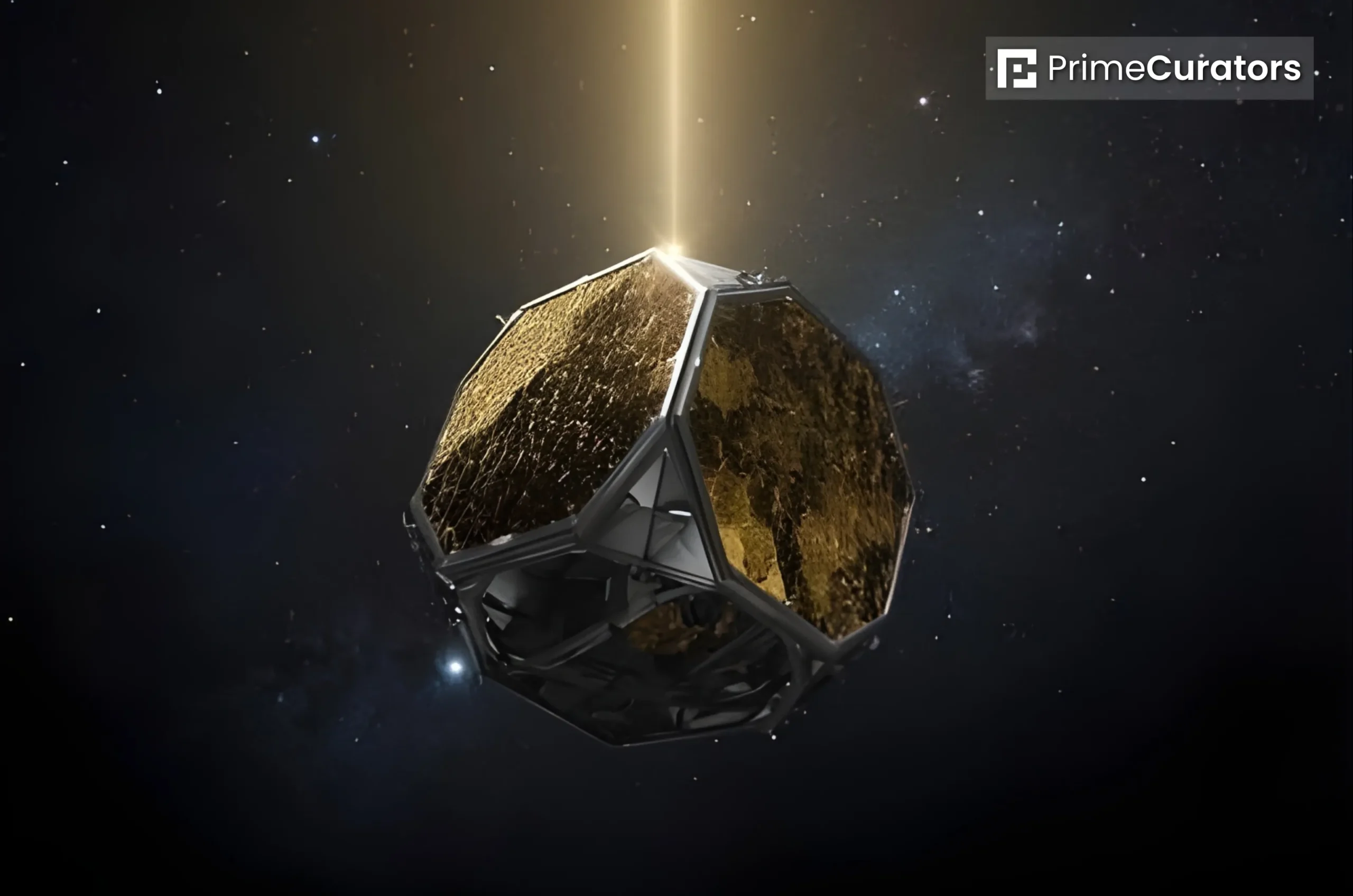
Why the James Webb Telescope Can See Distant Galaxies but Not Earth, Venus, or Mercury
A Marvel That Can’t Look Back Home
The James Webb Space Telescope (JWST), humanity’s most advanced eye in space, has amazed scientists by peering deep into the universe — over 13 billion lightyears away, capturing light from the earliest galaxies ever formed. But here’s the surprising twist: despite its incredible reach, Webb cannot observe Earth, Venus, or Mercury — the planets closest to us.
At first, that might sound like a flaw, but it’s actually a deliberate design decision. The reason lies in the telescope’s mission, location, and the unique way it captures light.
Why Webb Can’t See Earth, Venus, or Mercury
Unlike the Hubble Space Telescope, which orbits Earth, the James Webb sits at a special location called Lagrange Point 2 (L2) — about 1.5 million kilometers away from our planet. This point is where the gravitational pull of Earth and the Sun balance, creating a stable “parking spot” in space.
From this vantage point, Webb always faces away from the Sun and Earth, gazing into the cold, dark depths of space. This orientation helps protect its delicate instruments from heat and light — both of which could ruin its ultra-sensitive observations.
Because Webb operates in infrared, or heat-detecting light, even a small amount of warmth can overwhelm its sensors. Earth, Venus, and Mercury are simply too bright and hot in infrared wavelengths, which would blind the telescope.
Webb’s instruments must stay extremely cold — around -225°C — to detect the faint glow of distant galaxies, exoplanets, and nebulae. Pointing it toward our warm, nearby planets would be like trying to stare at a campfire while searching for fireflies in the dark.
A Different Kind of Space Observation
Webb’s design makes it ideal for exploring the early universe, not the planets in our backyard. Its powerful mirrors and sensors allow it to study:
- The first galaxies and stars after the Big Bang
- Atmospheres of distant exoplanets, helping us understand if other worlds could host life
- Molecular clouds and star-forming regions, revealing how stars and planets are born
For closer planetary observations, NASA still relies on Hubble, ground-based observatories, and specialized missions like Parker Solar Probe (for the Sun) or Magellan and VERITAS (for Venus).
You can explore NASA’s official Webb mission page here ↗ for the latest discoveries and image releases.
The Bigger Picture
The James Webb Telescope represents more than just advanced optics — it’s a time machine, showing us how the universe looked billions of years ago. Every image Webb captures helps piece together the story of our cosmic origins.
While it can’t observe Earth or its neighboring planets directly, its discoveries help us understand how worlds like ours form elsewhere in the galaxy.
For more fascinating reads about space, science, and technology, visit Prime Curators – Science & Space ↗ and stay tuned to the latest cosmic breakthroughs.