


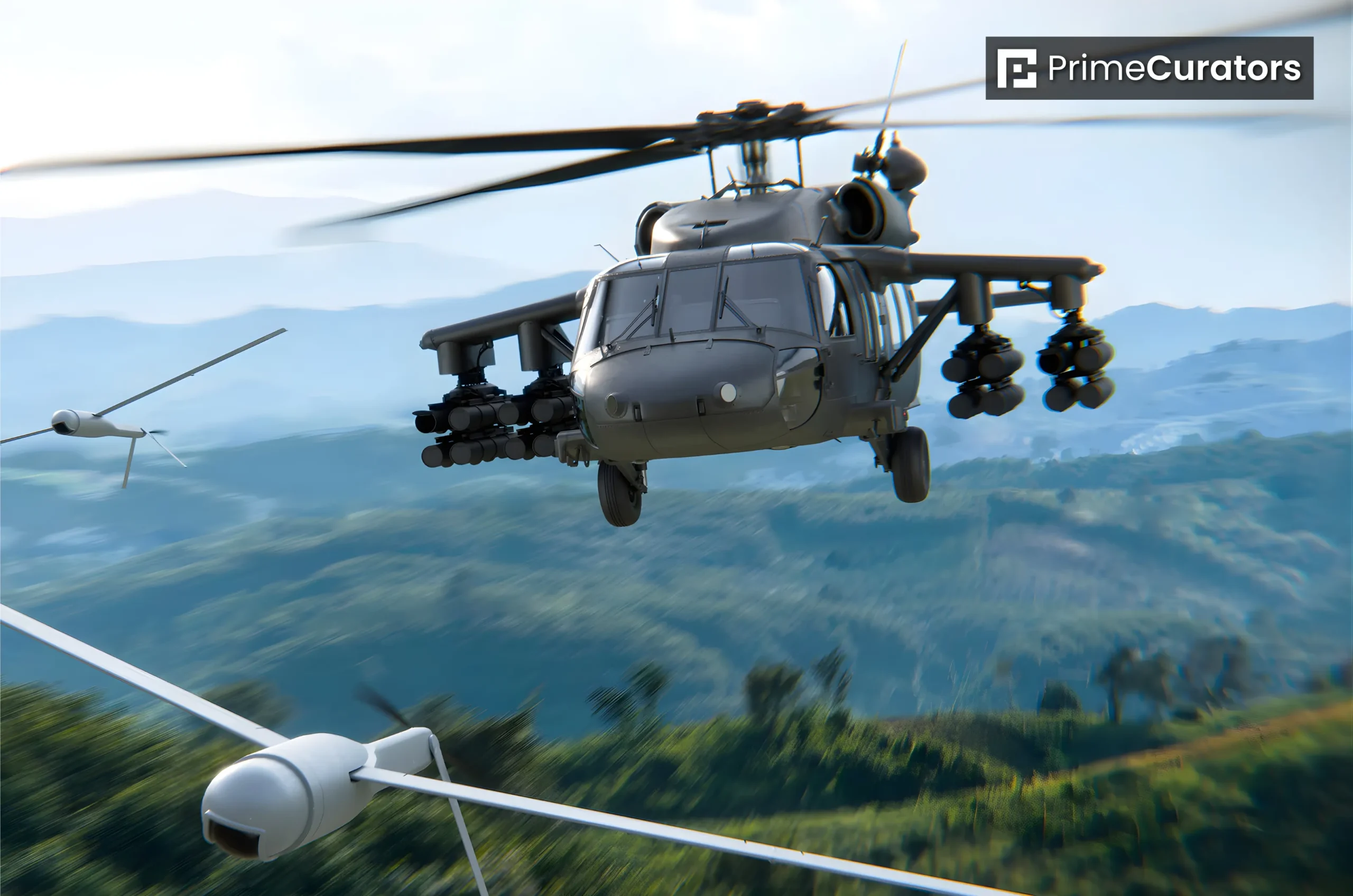
A New Era of Aviation: The Black Hawk Goes Autonomous
The future of aviation just took flight — without a pilot. Lockheed Martin ↗ has achieved a major milestone by transforming its legendary UH-60 Black Hawk helicopter into a fully autonomous aircraft capable of flying up to 1,840 miles without human control.
This new model, known as the “Optionally Piloted Black Hawk,” represents the merging of advanced AI technology and decades of proven military engineering. Developed in collaboration with DARPA (Defense Advanced Research Projects Agency) ↗, the autonomous Black Hawk can take off, navigate, complete missions, and land — all on its own.
This transformation signals not just an upgrade in technology but a shift in how future missions — military and humanitarian — might be conducted.
How It Works: The AI at the Helm
The key innovation behind this pilotless aircraft lies in its AI-driven flight control system. Using a combination of onboard sensors, real-time data processing, and adaptive algorithms, the system can make split-second decisions based on weather conditions, terrain, and mission requirements.
According to Lockheed Martin, the helicopter’s software architecture allows it to respond dynamically — whether that means adjusting altitude to avoid a storm or rerouting to avoid enemy radar detection. This intelligence enables missions that would normally require experienced pilots and multiple crew members.
The result is a machine that not only flies itself but does so with precision and safety comparable to (and sometimes exceeding) human control.
Beyond Combat: Life-Saving Capabilities
While the autonomous Black Hawk was initially designed for defense and combat support, its potential applications go far beyond the battlefield. The aircraft can:
- Deliver supplies to troops in remote or dangerous regions.
- Evacuate wounded soldiers without risking additional lives.
- Conduct reconnaissance missions in areas too risky for humans.
In humanitarian contexts, it could also play a role in disaster relief, delivering aid to inaccessible regions hit by earthquakes, floods, or wildfires — a capability that could save countless lives.
This innovation highlights a growing trend in defense and aerospace: using automation not just to enhance efficiency, but to protect human life.
Redefining Safety and Strategy
The integration of AI and autonomous systems is reshaping military strategy worldwide. The Optionally Piloted Black Hawk allows flexibility — it can operate with or without a human pilot, depending on mission needs.
This dual capability reduces risk in high-threat zones and provides unmatched operational versatility. For instance, in conflict situations, the helicopter can enter hostile airspace without endangering a crew. Conversely, for training or complex missions, pilots can still take control manually.
According to Lockheed Martin, such designs mark the beginning of an era where autonomy complements — rather than replaces — human expertise.
The Future of Flight Is Autonomous
Lockheed Martin’s breakthrough isn’t just about creating a drone — it’s about reimagining what flight can be. The company’s collaboration with DARPA demonstrates how AI, robotics, and aerospace engineering can converge to create machines capable of independent decision-making in complex environments.
As technology continues to evolve, this development could lead to civilian versions of autonomous aircraft for cargo delivery, search and rescue, or even emergency medical transport.
If successful, the Optionally Piloted Black Hawk could serve as a blueprint for future autonomous aviation systems that balance human control with machine precision — a step closer to making pilotless air travel a reality.