


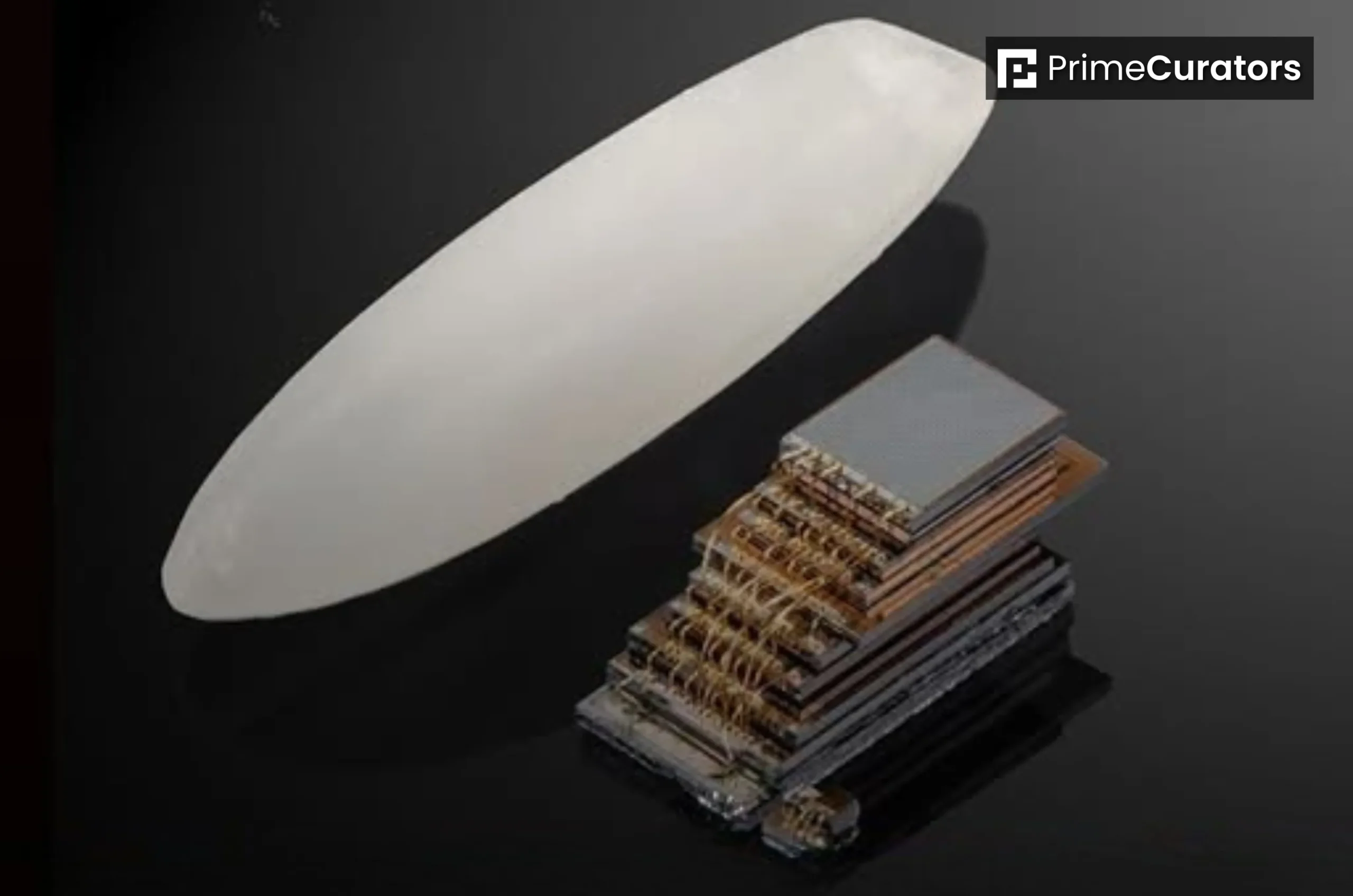
The World’s Smallest Computer: Smaller Than a Grain of Rice
When you think of a computer, you probably picture a laptop, desktop, or even a smartphone. But researchers at the University of Michigan have taken the concept of computing to an entirely new level—by creating the world’s smallest computer. Measuring just 0.3 millimeters, this device is tinier than a single grain of rice, yet powerful enough to open new doors in medical science and nanotechnology.
What Makes This Computer So Special?
At first glance, this microscopic computer looks like nothing more than a speck of dust. But inside, it packs sensors, processors, and wireless communication capabilities that allow it to perform meaningful tasks. Unlike traditional microcomputers, which retain data even when powered off, this device loses its programming and data when unplugged. That’s because at this scale, engineers had to reinvent nearly everything—including how it stores energy and communicates.
Still, the device is a breakthrough. It shows that computing doesn’t always need to be bigger and more powerful—sometimes, shrinking down opens up entirely new possibilities.
📖 Related: China’s Artificial Sun Breaks Fusion Record ↗
Medical Science Applications
One of the most promising uses for this tiny computer is in healthcare. Doctors could implant these microscopic devices into the human body to monitor temperature changes in cancer cells. Since cancerous tissue tends to behave differently than healthy tissue, precise temperature readings can give doctors a clearer picture of what’s happening inside the body.
This level of accuracy could help in:
- Early cancer detection
- Monitoring treatment progress
- Minimizing invasive procedures
Imagine being able to diagnose cancer with more precision, simply by implanting a device smaller than a grain of rice—without the need for major surgeries or bulky equipment.
Reference: University of Michigan – Research News ↗
Beyond Medicine: The Future of Nanotechnology
While medical applications are the current focus, the world’s smallest computer also represents the future of nanotechnology. Potential uses include:
- Environmental monitoring – tracking pollutants in the air or water
- Smart systems – embedding in tiny devices for the Internet of Things (IoT)
- Scientific research – studying biological processes at a microscopic level
As technology advances, we may see fleets of these micro-computers working together, providing real-time data from places humans or larger machines can’t reach.
Why This Matters
The creation of the world’s smallest computer is more than just a novelty. It’s a reminder that progress doesn’t always come from bigger, faster machines. Sometimes, shrinking technology down to almost invisible scales can revolutionize how we approach global challenges—from fighting disease to protecting the environment.
This tiny invention proves that size isn’t everything. In fact, it shows us that the smallest tools may one day solve some of the biggest problems.