


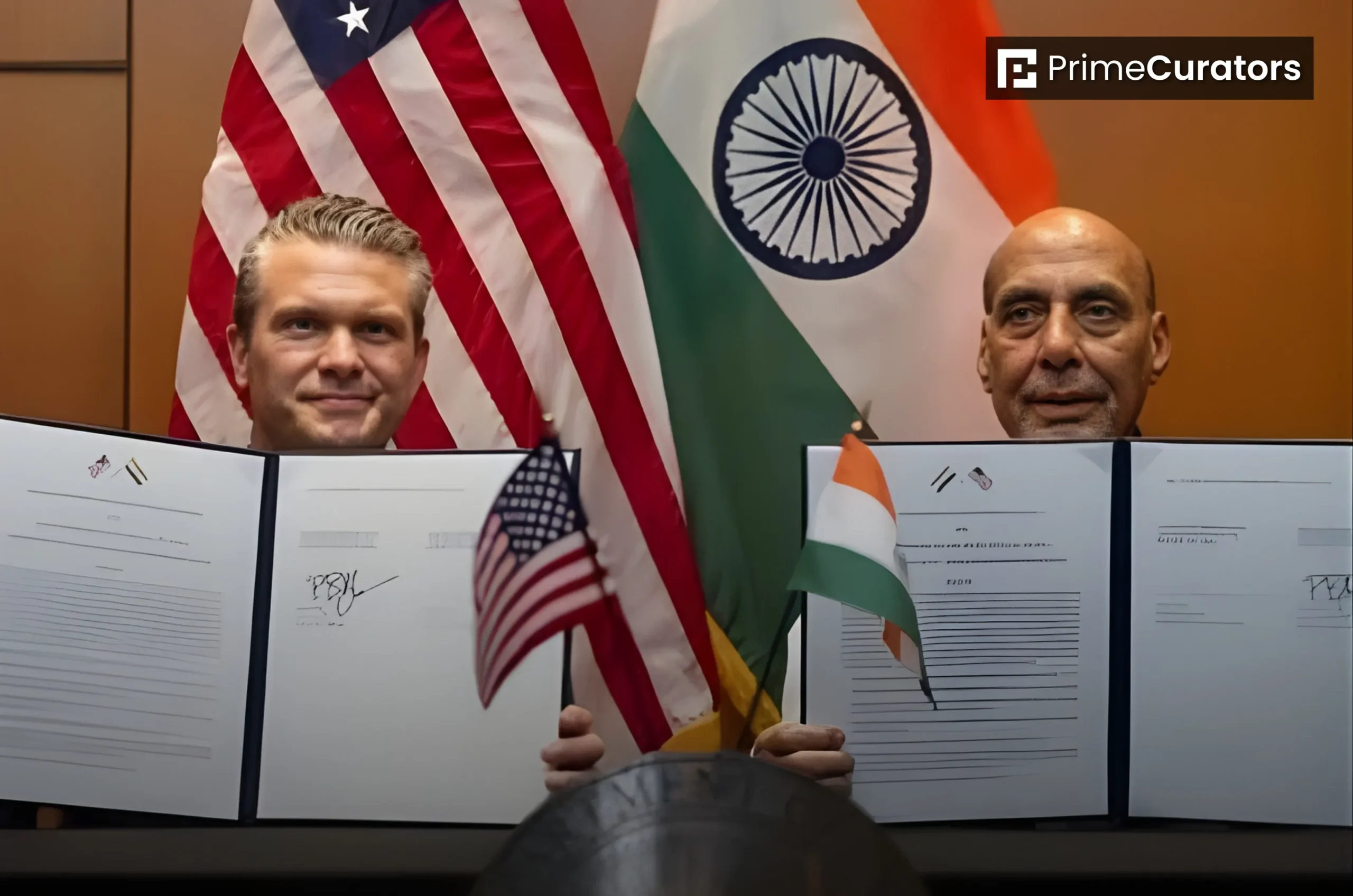
US, India Sign Decade-Long Defense Agreement to Boost Strategic Ties
In a move that signals deepening strategic cooperation, the United States and India have officially signed a decade-long defense framework agreement, strengthening one of the most significant partnerships in global geopolitics.
The deal aims to enhance military collaboration, promote defense innovation, and ensure stability across the Indo-Pacific region—a zone increasingly at the heart of global power competition.
Announced during high-level talks between top defense officials in Washington, the agreement builds upon previous defense cooperation initiatives such as the Logistics Exchange Memorandum of Agreement (LEMOA) and the Communications Compatibility and Security Agreement (COMCASA).
Together, these deals enable closer military logistics, secure communications, and joint operations — marking India as one of Washington’s key strategic allies in Asia.
For related geopolitical insights, visit Prime Curators Global Section ↗ to explore how nations are reshaping their alliances in a rapidly changing world.
A Decade of Shared Defense Goals
Under this new framework, both nations will focus on:
- Co-developing defense technologies in areas such as drones, cybersecurity, and artificial intelligence.
- Expanding joint military exercises, including the well-known Malabar Naval Drills, alongside other Indo-Pacific allies like Japan and Australia.
- Strengthening defense supply chains to reduce dependency on external powers and promote regional resilience.
According to a US Department of Defense ↗ statement, the pact will “set the foundation for long-term defense industrial cooperation, encouraging innovation and mutual security interests.”
Indian Defense Minister Rajnath Singh described the agreement as a “landmark step toward a secure, multipolar Asia,” while US Secretary of Defense Lloyd Austin highlighted the partnership’s role in promoting “peace and stability in the Indo-Pacific.”
Why the Indo-Pacific Matters
The Indo-Pacific region has become a focal point for global diplomacy, trade, and security — particularly amid rising tensions with China.
Both Washington and New Delhi share concerns about freedom of navigation in the South China Sea, regional cyber threats, and border security challenges.
This defense pact signals a united front for regional balance, aligning with the goals of the Quad Alliance (comprising the US, India, Japan, and Australia).
As reported by Reuters ↗, analysts view this agreement as part of a broader US effort to strengthen alliances and partnerships to ensure a “free and open Indo-Pacific.”
A Partnership Rooted in Mutual Benefit
Beyond military cooperation, the new pact opens opportunities for joint defense production, technology exchange, and training programs.
American defense firms such as Lockheed Martin and Boeing are expected to collaborate with Indian manufacturers under the Make in India initiative, further bolstering domestic defense industries.
Meanwhile, India gains access to advanced US defense technologies and intelligence-sharing capabilities, enhancing its readiness and modernization efforts.
The agreement also supports India’s ambitions to emerge as a global defense hub, capable of both producing and exporting cutting-edge systems.
Challenges Ahead
Despite the enthusiasm, experts note challenges ahead — including balancing relations with Russia, India’s traditional defense partner, and navigating complex regional dynamics involving China and Pakistan.
Still, the long-term framework reflects a commitment to continuity and collaboration, suggesting that both nations are ready to invest politically and strategically in a shared future.
As the world’s largest democracies, the US and India see this pact not only as a military deal but as a symbol of shared values — freedom, stability, and peace in an increasingly unpredictable world.