


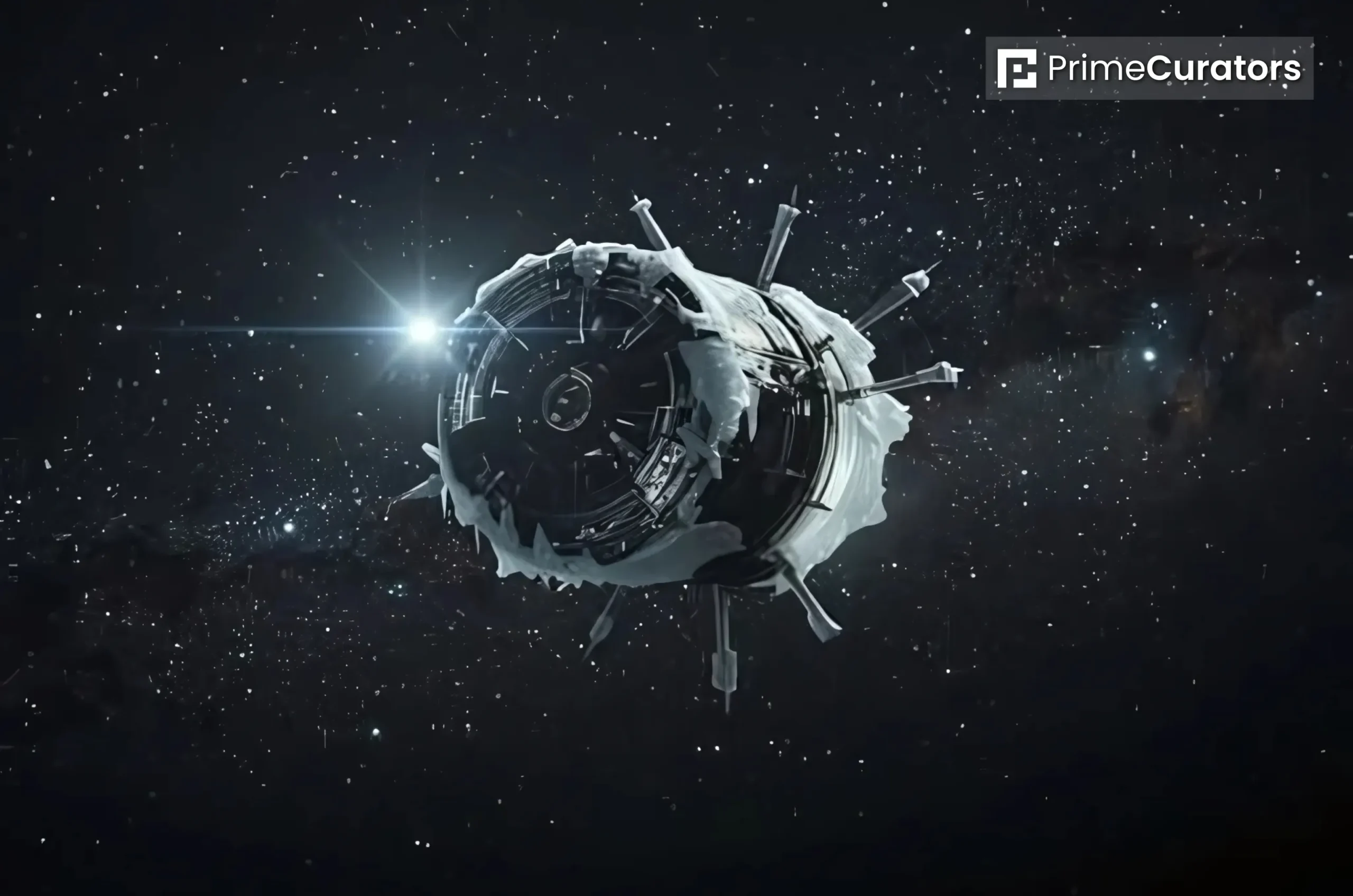
Voyager 1 Gets a Second Wind: NASA Revives Thrusters After Decades
In 1977, NASA launched the Voyager 1 spacecraft, a mission designed to explore the outer planets. What nobody could have predicted back then is that nearly five decades later, this little probe would still be out there, traveling through the vast emptiness of interstellar space. Today, at more than 15 billion miles away from Earth, Voyager 1 holds the record as the farthest human-made object in space. And just when it seemed like its journey might come to an end, NASA gave it a surprising new burst of life.
A 47-Year-Old Spacecraft with Failing Thrusters
For years, Voyager 1 relied on its main thrusters to stay properly oriented so its antenna could point back toward Earth. Without this alignment, the spacecraft wouldn’t be able to send or receive signals—a critical issue since its primary job is still to beam back scientific data.
But after 47 years in the harsh conditions of space, the main thrusters began to weaken. Engineers at NASA’s Jet Propulsion Laboratory (JPL) faced a daunting challenge: how do you fix a spacecraft that’s billions of miles away and running on technology from the 1970s?
The Clever Solution: Backup Thrusters Revived
In a move that almost feels like science fiction, NASA decided to reactivate backup thrusters that hadn’t been used since 1980. These thrusters were originally designed for short maneuvers during the spacecraft’s flybys of Jupiter and Saturn.
To everyone’s surprise, after more than 37 years of dormancy, the thrusters fired up successfully. This allowed Voyager 1 to regain proper orientation, keeping its antenna locked on Earth and ensuring communication continues. It was a bold fix, one that extended the mission of this historic spacecraft.
📖 Related Read: Gravitational Waves Finally Prove Stephen Hawking’s Black Hole Theorem ↗
Why Voyager 1 Still Matters
You might wonder—why keep a 47-year-old spacecraft alive? The answer is simple: Voyager 1 is humanity’s messenger to the stars. It continues to send back valuable data about cosmic rays, interstellar particles, and magnetic fields—information we can’t gather from Earth.
Even more symbolic is the Golden Record it carries, a time capsule with sounds, music, and greetings from Earth. Should Voyager 1 ever be found by another civilization, it will serve as a greeting card from humanity.
Reference: NASA Voyager Mission Updates ↗
A Legacy That Inspires the Future
Voyager 1’s story is more than just about science—it’s about human perseverance and ingenuity. Reviving thrusters that had been asleep for nearly four decades shows that creativity and determination can overcome even the most impossible challenges.
As technology advances, new missions will go further and gather more data. But Voyager 1 remains a symbol of exploration—proof that even with limited tools, humans can reach beyond the boundaries of our solar system.
NASA’s revival of Voyager 1’s thrusters is more than a technical win; it’s a reminder that exploration never truly ends. As long as Voyager 1 continues its journey, a piece of humanity will always be out there—quietly drifting among the stars.